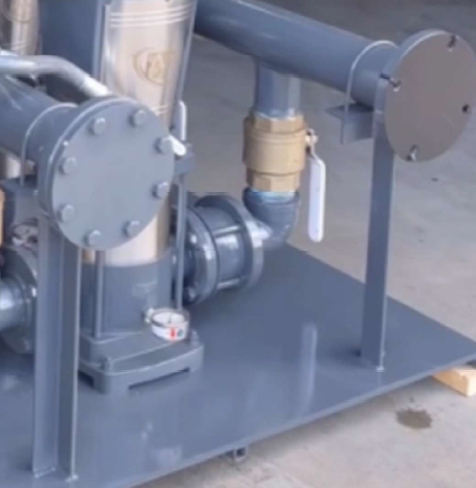
This subject seems simple and straightforward, but many failures are seen in this area of pump installation. Another common saying is that a pump is not a pipe stand. The pump is not designed to support piping; that is the purpose of fabricated pipe supports.
As a general rule in the millwright trade, it is recommended that the pump be properly positioned and secured first, and then the piping be aligned to the pump—not the other way around. A pump should not be installed in a position that forces it to pull misaligned piping into place. If the gap between flanges is significantly larger than the designed flange-to-flange distance, the piping should be reworked, spacers added, or appropriate gasket adjustments made. Pumps should be installed on a level plane and shimmed to ensure proper alignment with the piping.
Once shimmed, bolts should be tightened in a star pattern (similar to installing a vehicle wheel). You should never fully tighten one bolt first and then proceed to the others. All bolts should initially be brought to a “finger-tight” condition and then tightened in a crisscross pattern, moving as close to 180 degrees across as possible. Each bolt/nut should then be tightened incrementally, approximately 10–15 foot-pounds at a time, until the desired torque is reached.
Flat-face flanges will make contact across the full face of the gasket surface, while raised-face flanges will not meet on the outer diameter until fully bolted. The introduction of air and electric impact wrenches has greatly improved efficiency and reduced hand fatigue, but it has also contributed to damage of raised-face flanges due to uneven over-tightening. This can cause the flange to act as a lever, increasing force and leading to distortion or breakage. As Archimedes said, “Give me a lever long enough and I can move the world.”
PUMP FLANGES:
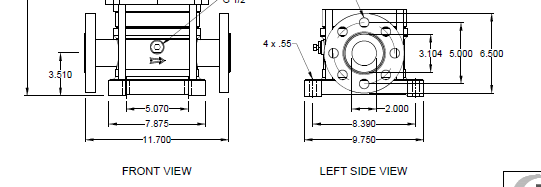
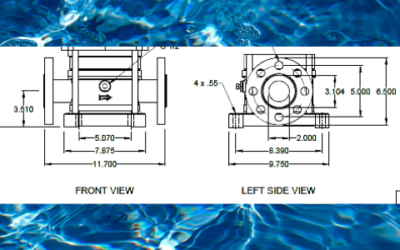
A pump is often the most expensive “pipe support” one can use. Nozzle loading is addressed in API 610 for rotodynamic pumps. In very general terms, it refers to the vertical and horizontal forces applied to the pump, both during operation and when idle. Using a pump to compensate for poor piping alignment or to support the weight of unsupported pipe runs will significantly reduce pump life. The only pressure a pump should be subjected to is internal hydraulic pressure within the volute—not external loads from misaligned or unsupported piping.
Pumps are excellent training tools. When installed incorrectly, they provide ample opportunity to learn from mistakes. Much like horses, pumps want to run—unless they are burdened beyond their design limits. When overloaded, even the most capable system will fail when you need it most.
PIPE SUPPORT EXAMPLES: